

News
September 2, 2026
Factories, Recycling, Social Impact, and Business Vision: The Virtuous Circle of Mr. Green Africa
.webp)
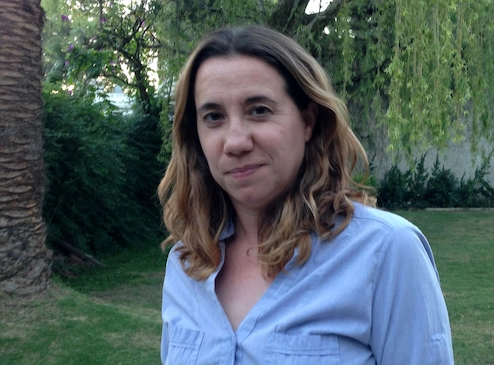
Lottie Free is Head of Partnerships at Mr. Green Africa (MGA), a plastic recycler in Kenya specializing in rPET, rHDPE and rPP. Prior to working at MGA, Lottie worked for the UK Civil Service in policy areas including single use plastic reduction, waste sector decarbonization, atomic energy, and public transport, as well as working for a philanthropic organization investing in renewable energy in Africa, Asia and Latin America.
GCFF: How did the Mr. Green Africa project come about? Do you think the model can be replicated in other countries?
Lottie Free: Our co-founders Karim Debabe and Keiran Smith saw the opportunity in Kenya to build a high-quality, large-scale plastic recycling factory, as at the time very little existed in the way of formal recycling. Although Kenya had a strong informal waste sector, there was gap between that and supplying high-quality PCR (Post-Consumer Recycled) to customers like Unilever.
Mr. Green Africa was launched in 2014, with two core principles. First, to try and introduce 'fair trade' principles to waste collection, like you see in agriculture—to try and help those collecting waste to earn a more predictable, reliable income. The second principle was to create value in Kenya. So rather than collecting the waste and then exporting it for recycling abroad, we've built the factory here in Nairobi. We believe MGA's model can be replicated and scaled in any country where the majority of waste collection and management is undertaken by the informal sector.
GCFF: We would like to know what stage you are at and what projects you have planned for the future.
Lottie Free: In 2025, we completed our biggest project to date: upgrading the factory to increase processing capacity from 4 kilotons per annum to 20 kilotons per annum, and adding capability to process PET (Polyethylene Terephthalate). Before, we were just running HDPE (high-density Polyethylene) and PP (Polypropylene).
So now, we are focusing on scaling up to maximize our capacity utilization. This means optimizing our processes, strengthening our supply chain and basically trying to do everything at a much larger scale. It’s a big challenge but it’s exciting and we're making progress. In order to sell out PET to our ideal customers, we have to get our final product certified, so we're working through the process to achieve that.
GCFF: Are you currently seeking additional funding? If so, how are you pursuing it?
Lottie Free: We are always on the lookout for funding we can use to help us increase our social impact—for example, to help us support our suppliers to access healthcare, education, financial tools. We are also in the process of securing some debt funding, which we're working with advisors (ICON Corporate Finance & I&M Burbidge) on to help us find the right lenders for our needs.
GCFF: From a business perspective, what has been your most significant commercial success? Which recycled product has been most successful with your customers?
Lottie Free: We've had lots of wins along the way, big and small. Probably one of the biggest was launching Unilever East Africa's first packaging made from 100% recycled plastic (their Vim and Sunlight scouring powders). We've also produced packaging for Shell and TotalEnergies for their lubricants. We're also proud to partner with companies like Grounded, who make excellent environmentally friendly cleaning products and wanted to make sure their packaging was as sustainable as possible too.
GCFF: What technological investment do you consider most important for the company right now?
Lottie Free: I think the investment we've made into PET recycling capacity, with EREMA machinery from Austria, is probably the most significant investment we've made recently.
GCFF: Finally, what outcome of the business model have you found most rewarding and/or surprising?
Lottie Free: Although we obviously have a big environmental impact, the social impact has been one of the most rewarding parts for me to work on. It is not easy, and the suppliers we work with face a lot of challenges. We'd like to be able to do more to help, but we have to remember we are a commercial business and not a charity. But within those constraints, I think we have been able to make a real difference. It's exciting to work somewhere where you can have an impact on people and the planet.
Exclusive interview with Lottie Free from the Global Climate Finance Forum
About Mr. Green Africa
Founded in 2014, Mr. Green Africa (MGA) is Africa’s first recycling company to become a Certified B Corporation and is built on the belief that business can be a powerful force for environmental, social, and economic transformation. MGA has developed a technology-driven, fully integrated plastics recycling platform that connects waste collection, processing, and high-quality production into one transparent value chain. At the front end, MGA's model integrates informal waste workers, micro-entrepreneurs, and consumers into the formal economy, enabling predictable, fair, and transparent income through structured plastic collection at source.