


News
October 5, 2026
SMEs and Startups: Essential Drivers of Innovation in Brazil
%2016.28.08.png)
Currency risk is the primary obstacle for foreign investors in Brazil, and fears of the real’s depreciation are even more pronounced for long-term projects. To boost investment in climate solutions, authorities created Eco Invest and a mechanism that features the Inter-American Development Bank (IDB) as a key intermediary.
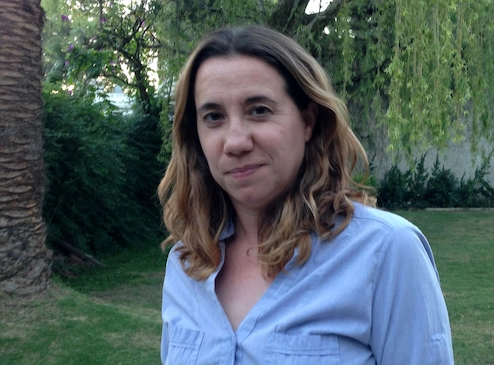
The system is replicable in other countries and is mobilizing significant amounts of capital, as explained in this interview by Mario Augusto Gouvêa de Almeida, President of the Fiscal Recovery Regime Supervisory Council (Eco Invest). He is unequivocal: SMEs and startups are essential drivers of innovation, decarbonization, and stronger Brazilian value chains.
GCFF: How does the currency protection mechanism offered to financial institutions to mitigate Brazilian real volatility work? Could this model be applied in other Latin American countries? Is Brazil collaborating with other emerging markets on this issue?
The Eco Invest Brazil currency mechanism addresses both sides of the hedging market: supply and demand.
On the supply side, the legislation that established the program authorized the Central Bank of Brazil to conduct derivative transactions with multilateral institutions and pass them on to the domestic market. In this context, the Central Bank and the Inter-American Development Bank (IDB) signed an International Swaps and Derivatives Association (ISDA) agreement, creating a channel for hedging operations.
Through this mechanism, the IDB can acquire derivatives in international markets at a cost reflecting its AAA credit rating—typically lower than the cost of transactions priced based on Brazil's sovereign risk. Subsequently, the Central Bank can acquire these derivatives from the IDB and enter into mirror contracts with Brazilian financial institutions, maintaining the terms secured in international markets.
This is expected to expand and improve the availability of long-term hedging instruments in Brazil. The ISDA agreement has already been signed, and the Central Bank is currently developing the operational infrastructure needed to implement the mechanism.
On the demand side, Eco Invest offers financial institutions foreign-currency credit lines funded by the Climate Fund, with an annual interest rate of 1%. Banks acquire derivatives on the market at commercial rates and use the program's catalytic capital to lower the final cost of the currency hedging offered to projects. Consequently, the hedge price is not administratively fixed: transactions take place in the market, while public funds help make this protection economically viable for long-term sustainable investments.
Once both components are fully operational, the system will function in an integrated manner. On one hand, the catalytic capital provided by the National Treasury will reduce the cost of currency hedging demand. On the other hand, the mechanism established between the IDB and the Central Bank will allow Brazilian financial institutions to access derivatives originating in international markets at a cost reflecting the IDB’s AAA credit rating.
This combination can address both the cost and the limited availability of long-term hedges—factors that represent significant barriers to mobilizing foreign capital for sustainable projects in Brazil.
The model could be replicated in other Latin American countries and emerging economies, particularly where the cost or scarcity of long-term currency instruments limits international investment. However, such replication would need to be adapted to each country's legal, institutional, fiscal, and foreign exchange frameworks, as well as to the capacity of its central bank and the involvement of multilateral institutions.
GCFF: Can Brazilian investors with foreign-currency exposure also use the system?
Eco Invest already features two currency hedging mechanisms. The first is the Liquidity Facility, designed for projects with revenue in Brazilian reais and debt denominated in foreign currency. If the real depreciates significantly, the instrument can provide a contingent liquidity loan to cover the project's additional cash needs. This facility is already available to participating banks, although no project has used it to date.
The second mechanism uses Eco Invest’s catalytic capital to lower the cost of derivatives, such as currency swaps. A financial institution raising funds abroad can convert a dollar-denominated liability into reais. With the Program’s support, the cost of this conversion can be reduced below the rate available under purely commercial terms, thereby lowering the final financing cost for sustainable projects.
In the third auction conducted under the program, banks were also required to offer equity investors—at no cost—an option protecting against extreme currency depreciation. The option’s strike price had to be set at least 10% above the depreciation already implied by the Non-Deliverable Forward (NDF) curve. The NDF curve reflects the exchange rate trajectory the market expects.
Therefore, the investor is not protected against a mere 10% depreciation. The protection becomes relevant when the real depreciation exceeds the market-anticipated level by at least 10%. Under current market conditions, this would equate to a cumulative real depreciation of approximately 50%.
As an "out-of-the-money" option designed to hedge against an extreme event, it is relatively cheap, allowing banks to protect a larger volume of capital. Although depreciation of such magnitude is not anticipated, the instrument offers investors an exit strategy in the event of a severe currency shock. It preserves a significant portion of their hard-currency returns. For example, an investment generating a 20% annual return in reais could retain about a 10% return in hard currency.
These instruments were not designed to provide generic protection against Brazilian investors' foreign-currency exposures. A Brazilian institution or company can benefit when it carries out an eligible transaction linked to external financing and sustainable project finance within the Eco Invest framework. Simply having foreign currency revenue, expenses, or investments is not enough to access the mechanism.
GCFF: How much capital has Eco Invest mobilized? Which sectors have attracted the largest volumes of capital?
The first four Eco Invest auctions mobilized approximately BRL 140 billion* in investment commitments. With the fifth auction, the program could approach BRL 200 billion*.
It is also important to distinguish between mobilization and disbursement. These figures represent commitments made by participating financial institutions and indicative portfolios presented during the auctions. The subsequent allocation and disbursement of funds to individual projects are governed by the timelines and requirements established for each auction.
The energy transition accounts for the largest volume of projects, with a special emphasis on sustainable fuels—particularly sustainable aviation fuel (SAF). Circular economy projects and sustainable sanitation models also represent significant areas of investment.
Other important areas include the bioeconomy and the recovery of degraded land, encompassing productive restoration, sustainable agriculture, and nature-based solutions. This diversity reflects Eco Invest's goal of supporting both the decarbonization of Brazil's energy system and industry and the sustainable use of its land and natural resources.
GCFF: Eco Invest has several lines of action—blended finance to mobilize external capital, credit lines to mitigate exchange rate volatility, credit lines to encourage currency risk hedging, and support for project preparation. Which sectors do you consider the most important and impactful?
Eco Invest prioritizes sectors aligned with Brazil's Ecological Transformation Plan (ETP) and studies identifying areas where the country has the greatest economic, environmental, and technological potential.
These studies indicate that Brazil is particularly well-positioned to lead the transition to a low-carbon economy. The country boasts a predominantly renewable energy matrix, vast biodiversity, land available to expand production without incurring further deforestation, reserves of critical minerals, a diversified industrial base, and a robust financial system. These advantages imply that the climate agenda can also serve as a strategy for economic development, increased productivity, job creation, and greater competitiveness in the international arena.
In this context, key areas of opportunity include the energy transition and sustainable fuels (including SAF); the bioeconomy and nature-based solutions; the restoration of degraded land and low-carbon agriculture; the circular economy; sustainable sanitation; resilient infrastructure; critical minerals; energy storage; green chemistry; and biomaterials.
The selection of sectors is not based solely on emissions reduction potential. It also considers each sector's capacity to attract investment, drive innovation, strengthen Brazilian value chains, expand exports, and create skilled jobs.
The various Eco Invest instruments are applied based on the specific barriers facing each sector. Mature projects may require long-term financing or currency hedging. Emerging technologies may need equity capital, grants, and support for applied research, while early-stage projects may require resources for project preparation.
Therefore, the program aims to channel capital into activities where Brazil can combine climate impact with strong economic potential and build lasting competitive advantages in the global low-carbon economy.
GCFF: What role do small and medium-sized enterprises (SMEs) offering climate solutions play in the Ecological Transformation Plan (ETP) and the Eco Invest policy?
Small and medium-sized enterprises—particularly startups and technology-based firms—play a pivotal role in the ecological transition. Many of the solutions needed to decarbonize the economy originate from these companies, which develop new technologies and business models in areas such as the energy transition, the circular economy, the bioeconomy, sustainable infrastructure, climate monitoring, and other green technology (greentech) solutions.
The third Eco Invest auction explicitly recognized their importance. Of the approximately 55 billion Brazilian reais (BRL) in investments committed by financial institutions, at least 20%—around BRL 11 billion—is expected to be allocated to equity investments, particularly in startups and innovative companies. These investments are expected to take place over the next five years, helping these companies scale their operations and transform technological solutions into commercially viable businesses.
The fifth auction deepens this strategy. In addition to supporting specialized investment funds and facilitating credit for projects with greater technological maturity, it includes grants for applied research and technology-based entrepreneurship. It also fosters cooperation among companies, universities, and science, technology, and innovation institutions, including through joint research and development projects.
These mechanisms recognize that SMEs and startups are not merely beneficiaries of climate finance; they are essential drivers of innovation, decarbonization, and stronger Brazilian value chains. Eco Invest seeks to help them overcome barriers to accessing capital, develop new technologies, and expand their contribution to the economy's green transformation.
GCFF: What are Eco Invest’s plans? Where are you focusing your efforts, and how do you foresee the economy evolving?
Eco Invest is entering a phase of consolidation and expansion. Having demonstrated its ability to mobilize significant volumes of capital, the program is increasingly focusing on the quality of capital allocation, the additionality of investments, and the measurement of their economic, social, and environmental results.
Key priorities include:
- implementing and monitoring the portfolios developed through the initial auctions;
- strengthening the monitoring, reporting, and verification system;
- expanding the program’s links with global investors, multilateral development banks, and climate funds;
- developing long-term foreign-exchange instruments;
- supporting project preparation and consolidating a more robust investment portfolio; and
- reinforcing the green transformation agenda as a national development strategy.
The green transformation should not be viewed solely as an environmental agenda. It also represents an opportunity to boost productivity, stimulate innovation, strengthen national value chains, attract investment, and create skilled jobs.
Brazil possesses significant advantages in renewable energy, biodiversity, agriculture, natural resources, and technological capacity. The current challenge is turning these advantages into financially viable projects, new businesses, industrial development, and sustainable, inclusive economic growth.
*As of September 2026, the exchange rate is BRL 5.1682 per U.S. dollar.