

News
December 1, 2025
Tailoring finance and policy to empower global small businesses to lead on climate action
Small and medium-sized enterprises are delivering transformative climate solutions across the Global South – restoring forests, producing clean energy, advancing circular agriculture, and building resilient local economies. These businesses constitute 90% of businesses globally, contribute over 50% of global GDP, and sustain the livelihoods of two billion people annually.
“Across all of the climate solutions we’ve mapped out, small businesses are leading the way,” said Marilyn Waite, founder of the Global Climate Finance Forum and managing director of the Climate Finance Fund, at COP30. “And yet, they are left out of accessing the capital needed to scale their operations to have the most impact.”
Despite delivering nearly 80% of locally-developed climate solutions in emerging markets, these high-impact enterprises receive less than 10% of climate finance flows.
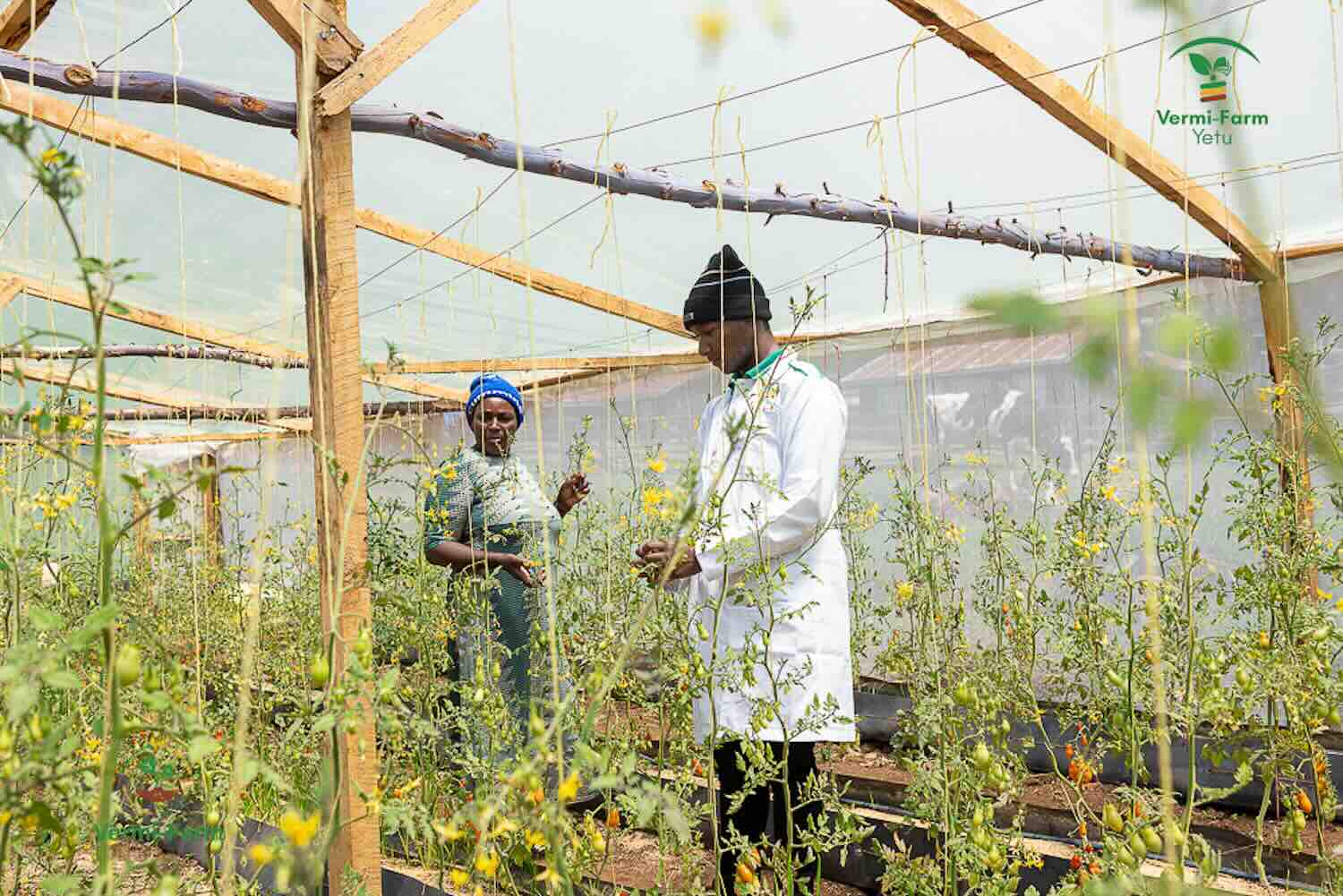
The disconnect is not due to a lack of ambition or innovation among these businesses. Small enterprises — such as Courageous Land, which has mobilized $35 million to scale biodiverse agroforestry across 157,300 hectares (roughly 389,000 acres) in Brazil, and the Vermi-Farm Initiative, which supports thousands of Kenyan smallholder farmers with climate-smart, waste-to-fertilizer practices — are demonstrating what effective, frontline climate action looks like. What they need now is an enabling environment that recognizes their central role in addressing the climate crisis and channels capital accordingly.
At COP30 in Belém, the Global Climate Finance Forum joined SME Climate Hub, International Trade Center, and Bankers for Net Zero to discuss how tailored financial instruments, cohesive policy frameworks, and targeted capacity-building can empower small businesses to deliver climate solutions at scale. Their recommendations offer a path to constructing a more predictable, accessible, and equitable financial architecture grounded in small businesses realities.
Finance: Unlocking capital
The first hurdle to scaling emerges the moment small businesses seek financing because, as panelist Dana Barsky, Global Head of Sustainability Strategy and Net Zero at Standard Chartered Bank, put it, “Small businesses do not usually fit in a typical risk profile of a global bank.”
Commercial banks are challenged to analyze the complex credit risk profiles of small businesses, which require additional time and incorporate the added risk of local currency devaluation. Still, Barsky takes an optimistic stance, highlighting Standard Chartered Bank’s dedication to blended finance—packaging small business loans into programs where concessional capital can absorb some of the default and currency depreciation risk.
“We’re trying to prove that the default rate is not as great as we think,” she explained. “As we prove that out, and we get more and more data, we’re able to make that concessionary capital less and less, and that ultimately will scale small businesses lending.”
Capacity Building: Cultivating investable data and skills
Even with access to appropriate blended instruments, small businesses often lack the technical knowledge and tools to compile consistent, credible, and investable data, creating a major bottleneck to reducing perceived risk and unlocking capital.
Royford Mutegi, co-founder of the Kenya-based Vermi-Farm Initiative, shared that one of the startup’s earliest challenges was obtaining “access to the right resources in terms of technical expertise to help… shape the data we’ve [Vermi-Farm] been able to generate so that we can… clearly articulate the impact to investors.” For example, Vermi-Farm Initiative has trained more than 8,000 smallholder farmers in sustainable agricultural practices, including organic farming, climate-smart techniques, and the use of technology in farming, saving more than 250,000 kilograms (275 tons) of greenhouse gas emissions, among other positive impacts. Some 87% of those reached are women and youth.
Nonfinancial support, such as assistance in constructing standardized models to compile traceable data and in accessing investor-readiness courses, was key to attracting attention from funders such as Livelihood Impact Fund, Roddenberry Foundation, and the Z Zurich Foundation over the last 2-3 years.
Vermi-Farm’s experience reflects a deeper structural barrier faced by many small businesses, said Heather Buchanan, CEO of Bankers for Net Zero (B4NZ), a banking group that wound down operations in October. “All of the reporting requirements we’ve had thus far in this entire evolution of net-zero standards has been very very top down.”
Complex, inconsistent, and duplicative disclosure requests from financial institutions place a heavy burden on small businesses pursuing sustainability-related lending, restricting their valuable contributions to the net-zero transition. As Buchanan put it, “If you’re a small business with maybe two bank accounts and five different customers, you’re potentially getting asked for seven different sets of information in seven slightly different formats in loads of paperwork. Everybody says ‘Oh, it’s really simple,’—it’s generally not that simple.”
To help rectify the issue, B4NZ’s SME Sustainability Data Taskforce partnered with the Broadway Initiative to release, in June, the UK SME Voluntary Emissions Standard. The model was designed to achieve high-quality data through a frictionless process where small businesses share first-hand emissions data in a format that works across both financial and procurement procedures. It reflects input from over 50 organizations across finance, business, government, and civil society, including small businesses, and aligns with existing frameworks such as PPN 006.
Panelist Mathieu Lamolle, Senior Advisor on Sustainable Global Value Chains at the International Trade Centre, applauded B4NZ on “creating practical solutions for small businesses,” echoing the call for tools that are “accessible, easy to use, replicable, scalable, global public goods.”
Other resources highlighted during the panel include:
- The SME Climate Hub provides a free ‘one-stop shop’platform that allows thousands of small businesses to cover all steps of the net zero journey, from measuring their emissions, to educating themselves and building climate action plans, to making a globally recognized commitment and disclosing their progress through annual reporting.
- ITC Deforestation-Free Trade Gateway is a digital platform that offers practical tools for data collection and deforestation risk analysis. It helps producers, cooperatives, exporters, and importers navigate sustainability requirements, including the EU Deforestation Regulation, and comply with emerging deforestation-related trade policies.
Policy action
Still, as several panelists emphasized, building small businesses capacity can only go so far without an enabling policy environment. SME Climate Hub CEO Pamela Jouven shared that “80% of businesses in the Hub’s community report low government support or lack of awareness of government incentives as a top barrier to climate action.”
The SME Climate Hub, which helps mainstream climate action for small businesses, addressed this gap in an open letter to the Heads of Delegation at COP30, calling for small businesses to be recognized as a “distinct stakeholder category that requires targeted incentives” within Nationally Determined Contributions (NDCs) and related frameworks. Jouven emphasized that this should also encompass inclusive green public procurement policy, noting that access to government contracts not only supports SMEs but can encourage larger corporations to align their value chains with climate goals.
The final Belém Package did not codify small businesses as distinct stakeholders in NDCs, but did highlight their role in climate action.
Building on Jouven’s points, Mathieu Lamolle from the International Trade Center added that “when you put small businesses at the center of policy design, then you embed them to becoming actors of change and to really becoming the engine of the National Climate Goals.”
Including small businesses in these frameworks, he said, empowers them to contribute meaningfully to climate goals and opens the door to greater financing and capacity, as governments and investors are more likely to support enterprises explicitly tied to national climate ambitions.
Aligning national policies, standards, and sustainability requirements in a way that is rigorous but manageable for small businesses positions them as active drivers of climate action rather than passive beneficiaries.
Enacting these changes also requires elevating small businesses visibility and amplifying their climate action successes. Or, as Milena Martins, Institutional Relations and Partnership Director at the Nature Investment Lab and Climate Ventures, put it, “bringing the narrative of the small businesses to the top of the discussion.”
Martins highlighted the often-overlooked role of language and taxonomy in shaping “culture and the economic system,” citing her organization’s opposition to the term “first loss,” which can frame small businesses as inherently risky, when the process is actually about generating reliable data and building a track record.
“We don’t like calling it ‘first loss window,’” Martins said, “because it’s not about losing, it’s about building data. When we build taxonomy and language… we are building a new market, we are building something.”
Scaling solutions across the Global South depends on aligning language, mindsets, and frameworks among all stakeholders to reflect small businesses as builders of credible, investable solutions.
With tailored blended finance instruments, technical and investor-readiness support to generate consistent, quality data, and policies that institutionalize and incentivize small businesses contributions to climate in national frameworks, we can cultivate the enabling environment these businesses need to scale their impact.
As ITC’s Lamolle put it, we must “position [small businesses] to the market as drivers for climate action… actors of change, and not just as beneficiaries of support.” He added, “An accessible, equitable, and consistent financial system will provide small businesses with the recognition and capital commensurate with the true value they create in driving climate solutions.”