

News
October 5, 2026
The Age of Electricity: The Development Opportunity No One Is Talking About

A major headline: we are in “The Age of Electricity,” according to an unprecedented, data-rich report from the International Energy Agency (IEA). Yet, here we are in October (the report was released in September 2026), still waiting for both press coverage and international debate. What is happening? Perhaps it seems too easy to deploy a technology invented in the 1800s, or perhaps it feels entirely utopian—despite scientific evidence—to believe that international coordination could bridge the North-South divide, finance small and medium-sized enterprises, and have a decisive impact on climate change.
FIGURES AND EXAGGERATED NEWS ABOUT THE ARRIVAL OF THE END OF THE WORLD CAUSED BY AI
The IEA report concludes that, using currently available technologies and energy prices similar to those seen before the current supply crisis, electricity could cost-effectively meet 33% of global final energy consumption by 2035, up from the current 23%.
The core analysis employs a high-electrification scenario, known as HES. Reaching 35% by 2035 requires accelerating fuel switching, improving efficiency, and expanding access to modern energy services. With this combination, electricity would provide more than half of the world's useful energy. In contrast, the trajectory based on current policies and trends would place electrification at close to 30%. This gap reflects necessary additional decisions, not an inevitable outcome.
Electrifying human activity is the primary climate solution currently available, and it is within our reach. Contrary to what we see daily in the press, its primary development is in transport rather than artificial intelligence, which has recently been the subject of apocalyptic predictions.
Households and businesses hold the key to the "Age of Electricity"; a coordinated acceleration could achieve universal access by 2035 with an investment of around $23 billion annually, according to the International Energy Agency’s (IEA) special report on electrification*.
Between 2015 and 2025, global electricity demand grew by more than 3% annually—nearly double the rate of total energy demand growth. This increase is driven both by the expansion of activities that already rely on electricity—such as cooling, appliances, digital services, and advanced manufacturing—and by the replacement of fuel-based technologies, particularly through electric vehicles. China accounted for more than 60% of the global rise in electricity demand during that decade.
Electric equipment typically wastes far less energy than combustion-based systems. Consequently, although electricity accounts for 23% of final energy consumption, it delivers nearly 40% of useful energy and powers activities that generate over 45% of global GDP.
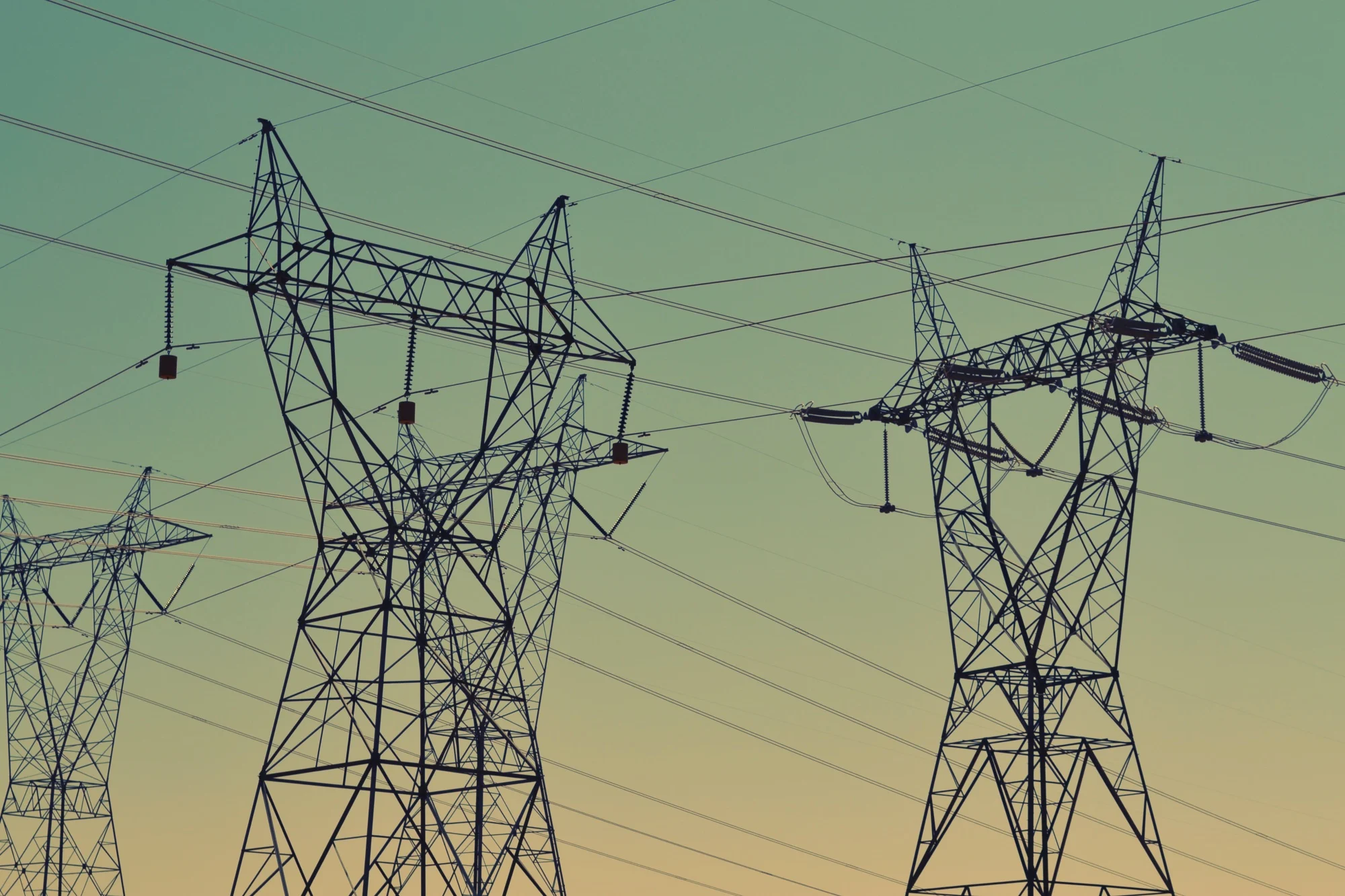
However, it is not all smooth sailing: under the HES, peak electricity demand would rise substantially by 2035, increasing pressure on grids, which would need to expand about 40% faster than over the past decade and reach roughly 115 million kilometers of operational lines. At the same time, the organization emphasizes that the supply of critical minerals and technology value chains—currently characterized by high levels of concentration—represent a key risk area that the industry must manage.
A SHIFT TAKING PLACE IN HOUSEHOLDS AND SMALL- AND MEDIUM-SIZED ENTERPRISES
Forget data centers: the "Electricity Era" is unfolding on a small scale, driven by electric cars and motorcycles, efficient cooking appliances, and small and medium-sized enterprises cutting back on fossil fuels.
Financing is a crucial factor. Annual investment in end-use electrification would need to rise from approximately $320 billion to around $1 trillion by 2035. Meanwhile, investment in generation, storage, and grids would reach about $2.5 trillion annually under a net-zero-compatible scenario. A significant portion of these decisions rests with households and small businesses, which may lack the necessary capital even though electric equipment generates operational savings.
The IEA’s core analysis employs a high-electrification scenario, known as HES. Reaching a 35% share by 2035 requires accelerating fuel switching, improving efficiency, and expanding access to modern energy services.
The scale of the HES is substantial: the global electric vehicle fleet would grow from around 80 million to approximately 700 million by 2035; the share of new vehicle sales would approach 100%. Electricity’s share of transport energy consumption would rise from approximately 2% to 13%. Electrification would make it possible to avoid an oil demand of about 18 million barrels per day by 2035.
Buildings, heat pumps, and electric stoves, among other things, are key elements of a revolution that began in 1800 when Alessandro Volta created the first electric battery.
Industry accounts for nearly 40% of global final energy consumption. Although it uses electricity for motors, aluminum production, and electric arc furnaces, it relies heavily on fuels to generate heat. Immediate opportunities lie in low- and medium-temperature processes—particularly in the food, textile, and paper sectors, as well as certain chemical activities. Industrial heat pumps can be attractive when operated for long hours and used to capture waste heat, but they require technical expertise, financing, and adequate electrical grid connections.
CHINA'S DEPARTURE FROM THE GLOBAL SOUTH AND THE CHALLENGE OF THE DEVELOPMENT GAP
The IEA identifies significant capabilities in China, Europe, Japan, Korea, and North America. This expansion offers opportunities for production and employment, although shortages of electricians, technicians, and engineers could delay projects.
The report shows that electrification can reduce inequalities but can also widen them if investment and benefits concentrate among those who already have the necessary infrastructure, technology, and capital. The gap manifests in terms of access, supply quality, the ability to finance equipment, and the potential to develop domestic industries.
A crucial distinction must be made: the IEA does not strictly divide the world into the Global North and Global South. It groups advanced economies with China because of their high levels of electrification and technological capacity; it then distinguishes between other emerging and developing economies with electricity access rates above 90% and those facing greater access deficits. Consequently, its findings also reveal profound disparities within the Global South itself.
The report estimates that 730 million people lack electricity, with more than 80% of them in sub-Saharan Africa. Under current policy trajectories, over 510 million people would still lack access by 2050.
An accelerated pathway could achieve universal access by around 2035, requiring average annual investments of approximately $23 billion.
Emerging markets (excluding China) are home to two-thirds of the global population but receive less than 30% of total energy investment and only 20% of investment in the power sector.
In Latin America, current investment levels (around $70 billion in 2025) need to be scaled up to exceed $200 billion annually by 2035.
Globally, more than 2,500 GW of projects—spanning renewables, storage, and large-scale loads—are stalled in grid connection queues. In the European Union, 340 GW have secured connection agreements, while another 700 GW are pending.
For a project to be investable, clear answers are needed for four questions: Is there a credible plan? Is the investment profitable? Are the risks predictable? And can the project actually be built? In many countries across the Global South, these answers are weak or nonexistent, stalling investment.
Prioritizing decentralized solutions in the Global South (such as mini-grids), regulatory reforms, and coordinated international cooperation are essential to ensuring the "Age of Electricity" does not create yet another development gap.
EMISSIONS REDUCTIONS WITHIN REACH
The source of that electricity determines a significant portion of the climate benefit. Under the generation mix associated with stated policies, low-emission sources would collectively cover the entire increase in generation, although regional disparities would persist and gas usage would rise.
According to the IEA, the more conservative scenario would cover approximately 85% of the increase. A mix compatible with net-zero emissions would not only meet new demand but also displace large amounts of existing fossil-fuel-based generation.
In this latter scenario, low-emission sources would account for 90% of global generation by 2035. Annual solar additions would exceed 1,200 gigawatts and wind additions would hover around 400 gigawatts, accompanied by an expansion of nuclear and hydroelectric power. The IEA emphasizes that comparing technologies solely based on generation costs is insufficient; factors such as when they produce power, the firm capacity they provide, and the demands they place on grids, storage, and flexibility systems also matter.
Grids emerge as a potential critical constraint. In the net-zero-compatible generation scenario, the total length of global grids would increase from over 85 million kilometers to approximately 115 million kilometers by 2035. The pace of expansion would need to be roughly 40% higher than that of the previous decade. The challenge involves major transmission lines and local grids capable of handling new demand, distributed solar installations, batteries, and bidirectional electricity flows.
Under the High Electrification Scenario (HES), the global electrification rate is projected to reach 35% by 2035. This level of adoption would enable a 40% reduction in end-use emissions, reduce oil imports by 15 million barrels per day and avoid around 120 billion cubic meters of annual natural gas imports by 2035. For fuel-importing regions, this would translate into annual savings of approximately US$400 billion.
Why isn't everyone talking about the "Age of Electricity"? In addition to doubling energy efficiency and tripling renewable energy use, science tells us we must quadruple the pace of electrification over the coming decade. It is a task of immense scale and urgency, yet it is well within reach.