

News
July 13, 2026
“The main thing now is to mobilize capital at scale”: Carla Orrego (Climate Policy Initiative) Analyzes London Climate Action Week
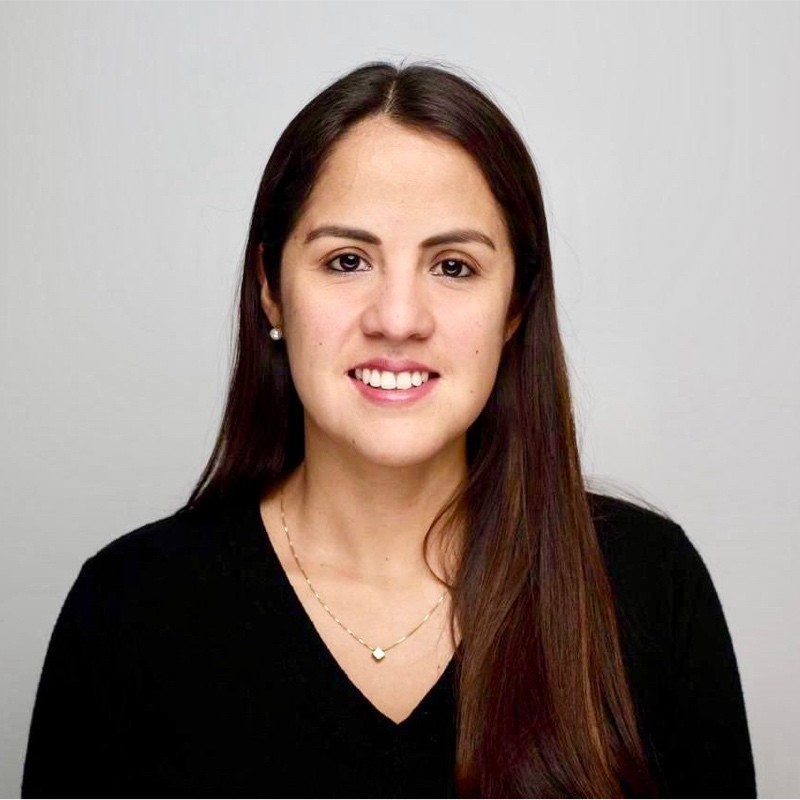
Carla Orrego is Innovative Finance General Manager at the Climate Policy Initiative (CPI). She leads the Financial Innovation Structuring & Advisory unit, where she drives the design and development of innovative financial mechanisms to channel capital toward climate mitigation and adaptation solutions. With over 12 years of experience spanning investments, financial structuring, and sustainable finance, she brings deep expertise in mobilizing private capital for impact. Carla holds an MBA from the UC Berkeley Haas School of Business and a B.S. in Economics from Universidad del Pacífico, along with certifications in Sustainable Capitalism & ESG (Berkeley Law), Climate Investing, and Sustainable Investing (CFA Institute).
GCFF: The first thing I wanted to ask you for is a brief analysis of what you saw at London Climate Action Week. We already have figures: 100,000 people attended; there were 1,300 events throughout the city. It is now the largest independent climate-related gathering. What were the central themes, which actors in society are leading the fight against climate change, and how is the financial industry evolving in these areas?
Carla Orrego: London Climate Action Week is growing exponentially year after year. Before, the “flagship climate week” was in New York. Now, London is more important in that sense.
And the dynamics have changed in terms of priorities and participants. We see a mix of different actors—governments, financial institutions, insurers, NGOs, and corporations. So, we observe that no one is missing, something that was the case before.
Before, the climate discussion was largely about “development finance,” and now we have much more participation from the private sector, including many family offices and high-net-worth individuals, becoming more involved in the discussion. Another notable change, or one that is palpable, is the presence of the Big Four (Deloitte, PwC, EY, and KPMG), the leading consulting firms, which are much more involved. Before, they might participate in an event; now they organize them.
Regarding the issues, the main focus revolves around the need to mobilize capital at scale—understanding the best use of money for governments or investors that can catalyze much more capital.
There's a big debate about how to use concessional capital (public and philanthropic, which is now scarcer) more efficiently to scale these kinds of projects, initiatives, and climate solutions in general.
GCFF: Do you see capital as scarcer even though, from what you're telling me, the conference is bigger and has a wider variety of participants?
Carla Orrego: The problem with all these climate solutions and projects is that they require a lot of investment, and public capital from governments or philanthropy isn't enough. So, private sector participation is crucial.
Before, there was an ecosystem where it was much easier to access government capital. Now, due to the new geopolitical situation, those budgets have been cut.
However, private capital is entering the scene more forcefully, and so many of the discussions are about how to use scarcer concessional resources from government and philanthropy to attract and better leverage that private capital. Previously, an invested dollar might have generated 2 or 3 dollars, but now the target is 5 or 10.
The other prominent theme at the London event was everything related to adaptation, resilience, nature, and biodiversity. These are, let's say, the most difficult sectors and areas to monetize. We all benefit from ecosystem services, from having cities that are more resilient to natural phenomena, but no one invests in them because it's harder to monetize them in the short term.
So many of the discussions have revolved around how to make them more investable because we're already feeling the effects, such as water scarcity, heat waves, or the fires in California, for example.
GCFF: Lately, there's been a lot of talk about "blended finance." Do you think it's the type of structure that currently has the most potential?
Carla Orrego: There isn't a single solution. Blended finance is a structuring approach, a way to align the incentives of different actors to make a project or solution viable.
The underlying issue, and why blended finance can be so promising, is that the problems it seeks to solve are typically complex and don't just affect one actor or a specific area; they have externalities and ramifications. Therefore, the participation of multiple actors is crucial; there isn't just one way to implement these solutions.
Climate solutions are perceived as high-risk because they are new and unproven, so the private sector is more hesitant to invest directly or to be the first to invest. Blended finance, therefore, allows different actors to work together based on their individual interests to make the solution viable.
GCFF: When you spend a week at a conference like the one in London, coming back with so much information and such a clear focus, especially in the midst of a truly historic heatwave, you then return to everyday reality and realize that, at least in the financial press, climate solutions aren't part of the conversation, and the only topics discussed are artificial intelligence (AI) and oil.
We're seeing that with artificial intelligence, a lot of capital is flowing into financing data centers, and that these constructions are unpopular in both the United States and Europe, so they're increasingly being installed in developing countries. This opens a new front in the midst of an already difficult situation. Is this something that worries you?
Carla Orrego: AI is an interesting example because it demonstrates how quickly the private sector can move if there's a clear business opportunity and a certain perception of risk.
So, unlike the climate sector, governments don't have to get involved because they don't have to convince anyone that there's a market or create demand for the technology. That's the problem with climate: it's less tangible; it's harder to understand how you invest in the asset, how you're mitigating your risk. And I think there's also been an issue of information asymmetry in clearly explaining the climate investment opportunity.
In artificial intelligence, that's much clearer. It's a new technology, it's tangible, it's the typical venture capital model where there's a product, it's going to solve a problem, and it's discounted. These days, it's assigned a higher value even though many companies are only just beginning to materialize their business model and many aren't yet generating profits. So that's a very clear example.
In areas like nature or adaptation, the value is much clearer for society as a whole than for individuals. It's harder to have that sense of urgency, of the opportunity that will give me quick returns.
But then, with AI, what starts to happen is that, at a certain point, the market alone isn't enough to develop an industry. So, there's competition over where to build data centers, water usage, or energy consumption. All those externalities that haven't yet materialized, but will become apparent, will force governments to regulate.
And the problem with data in particular is that it's very localized. This is particularly important for developing countries because for these international investors, national or local issues aren't a priority, and this friction is going to start. The solution here isn't to discourage investment in artificial intelligence, but to think about how to make this more resilient and how the private sector analyzes the situation from a risk perspective.
GCFF: The Climate Policy Initiative (CPI) is an analysis and advisory organization with expertise in finance and policy. Its mission is to help governments, businesses, and financial institutions drive economic growth while addressing climate change. CPI often functions as an "opportunity hunter" capable of turning a climate solution into a financial vehicle.
Carla Orrego: Different investment opportunities can be identified where the market tells investors, "Here's a business opportunity." And what we do is see where that opportunity might be and help design the financial mechanism to make it happen. It could be a securitization, an investment vehicle where we see how to group all the contracts, how many contracts, what type of financing, and then package it all, or add it all up in this vehicle. This vehicle is then offered to investors because it has an attractive return and because the risks have been managed so that investors don't think they won't get paid. There, risk perception becomes a super important factor again.
Today we need to be more creative because before, concessionary resources allowed you to lower the cost of capital, and now there's public financing. I think the most important thing about meetings like London Climate Week is the connections, because the market is very fragmented. There are many small players, many doing similar things, and there's a need to integrate to avoid duplicating efforts and to collaborate where there's the greatest potential impact.
Exclusive interview with Carla Orrego from the Global Climate Finance Forum