

News
November 6, 2026
The Solutions Exist. Political And Industrial Leaders Have To Become Aware Of This.
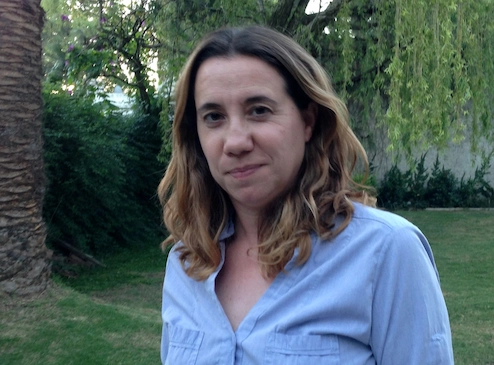

The Solar Impulse Foundation, created in 2016, travels the world with a message: "Efficiency is the greatest opportunity of our time for the climate, but also for energy security, competitiveness and quality of life. The solutions exist and are profitable. What is missing is the decision to deploy them," explains its Founder and President, Bertrand Piccard, in an interview.
GCFF: I would like to ask for a sort of "map" of climate solutions, as I believe you are best positioned to provide a global overview: which countries and/or regions are leading innovation in climate solutions? Regarding small and medium-sized enterprises (SMEs) in the Global South, which countries are the pioneers?
Bertrand Piccard: We have 1,600+ labeled solutions; 104 are based in the Global South, and India clearly stands out. It accounts for 37 solutions, more than a third. Africa follows with 32, driven by South Africa but spread across 19 countries, which shows how widely entrepreneurial energy is distributed across the continent. Then come the rest of Asia (18, led by Singapore and China), Latin America and the Caribbean (10, with Argentina, Peru and Brazil), and the Middle East (7, mostly the UAE and Saudi Arabia).
The Solar Impulse Foundation is based in Europe, which naturally shapes our network and outreach. More than 300 volunteer industry experts assess every solution we label against strict criteria of technical feasibility, environmental benefit and profitability. That gives us a good view of who is bringing credible solutions to market, even if it is not a census of global innovation. As a result, most of the solutions in our portfolio come from companies based in Europe. That said, the picture is evolving quickly: the number of solutions from the Global South is growing steadily, and many European solutions are also being successfully implemented in Global South countries, so our portfolio's impact extends well beyond Europe's borders.
GCFF: Solar Impulse’s work in identifying and certifying solutions is fundamental—even foundational. What tools do you use to reach governments, major corporations, and international organizations to encourage them to support and scale up your work?
Bertrand Piccard: I have always believed that you cannot change the world by telling people that they have to protect the miracle of life and the magic of nature. Many decision-makers aren't receptive to this message because their goal is to create jobs and make a profit. This is why I use every channel available to bring political and industry leaders face to face with clean and efficient solutions that are already available, economically profitable, and ready to scale.
I spend a lot of time travelling, speaking at international conferences, giving media interviews and, above all, holding private, high-level meetings with policymakers. That is where I can explain, in person, that protecting the environment is no longer a cost but a formidable opportunity for growth, jobs and competitiveness.
But it is not only about me. The Foundation is present at major international sustainability events, and our publications and social media bring visibility to the solutions we have labelled. The press regularly covers many of them, which shows that the interest is real.
We also bring people together directly. Our annual events and the Pioneers Forum create matchmaking opportunities between innovators, investors, corporations and public authorities. We showcase our solution providers at major cleantech fairs, and we work constantly with members of our ecosystem through strategic alliances. By connecting the right people, we turn good ideas into real projects.
Ultimately, our goal is simple: to show those who make decisions that the solutions exist, that they work, and that supporting them is in everyone's interest.
GCFF: Can Solar Impulse be considered a lobbyist in addition to being a catalyst? Over the years, which arguments have proven most effective in forging alliances and implementing climate solutions on a large scale?
Bertrand Piccard: It is advocacy rather than lobbying, as the Foundation is not-for-profit. It works as a catalyst and an accelerator. Today, the solutions exist. Political and industrial leaders have to become aware of this.
We know the main challenges to scaling innovation are financial and regulatory. Therefore, we are working on these two aspects. We are working with our ecosystem of investors to match them with innovations. We also regularly meet with policymakers and join alliances to improve the regulatory framework.
A very effective argument is the cost-competitiveness of efficient solutions and how they can reduce household bills or improve industrial competitiveness. And national sovereignty. This is why we showcase success stories and prove the business case for investing in efficiency.
GCFF: We are experiencing heatwaves, droughts and a whole series of natural disasters. The mainstream media and the general public do not quite link these events to climate change; and when they do, a sense of fatalism prevails—the idea that it is "already too late." Why hasn't the "solutions-oriented" approach gained more traction among the general public?
Bertrand Piccard: I think the first reason is that for years the climate message has been built on high costs and sacrifice. It has shown people melting glaciers, burning forests and apocalyptic scenarios, and then told them they would have to give things up, reduce their comfort and their mobility. When someone feels threatened in their lifestyle, fatalism becomes a form of self-protection. I understand that reaction, but it leads nowhere.
The second reason is that protecting the environment has long been presented as the need to degrow the economy, as if we had to choose between a healthy planet and a prosperous society. That opposition is false. Most of what we need to do, such as using energy more efficiently, wasting fewer resources, and replacing outdated technologies, is economically profitable. But as long as the public sees ecology as a constraint, it will not embrace it.
The third reason is that the media naturally give more space to disasters than to solutions. A catastrophe is impactful and immediate, while a solution that works quietly in a factory, a building or a farm rarely makes the headlines. So people see the problem every day, but almost never see that the answers already exist.
That is exactly why we created the Solar Impulse Foundation. We have labeled over 1,600 solutions that are technically feasible, good for the environment, and economically viable. Once people discover this, something changes: they realize that we are not waiting for a miracle; we are waiting for the courage to challenge the status quo and implement the solutions we already have.
So no, it is not too late. But it is too late to be late! Every year of delay makes the transition harder and more expensive, and this is the message we must convey: not guilt, but opportunity; not sacrifice, but a better quality of life, with cleaner air, more jobs and greater resilience. We need to change the narrative, move from an ecology of sacrifice to an ecology of action and pioneering spirit.
GCFF: Solar Impulse’s "1,000 Solutions" represent a catalogue of incredible surprises for anyone browsing the website. Of all these solutions, which ones do you single out as key ideas for the future, and why?
Bertrand Piccard: When we go back to highlighting solutions based in the Global South, what strikes me most is their pragmatism. These are not distant promises. They address concrete problems, often with impressive economic logic:
In India, GreenJams has developed Agrocrete, a carbon-negative bio-concrete made from crop residues and industrial by-products. TriNANO Technologies offers a nano-coating that improves the performance of any solar panel from the day it is applied, whatever its type or age. Aganitha Space Technologies uses AI and satellite imagery to detect and track solar installations worldwide.
In Tunisia, DIDA MIND's Energy Save lets industrial sites monitor and control their energy use while improving performance and maintenance.
In Brazil, Macaw Energies captures flared gas and methane with a mobile system and turns it into low-carbon LNG, transforming waste into value.
In the United Arab Emirates, FortyGuard provides high-resolution temperature data to help cities understand and manage urban heat.
These examples show that the Global South is not waiting for solutions to arrive from elsewhere. It is producing them, and often leapfrogging older, more polluting models.
GCFF: The final question inevitably concerns aviation powered by clean fuels: at what stage are we in the process leading up to actual travel on such aircraft?
Bertrand Piccard: We are still at the demonstration and testing stage, but the technology is moving beyond the purely experimental phase. With Climate Impulse, our aim is to accelerate progress by demonstrating what is possible with green liquid hydrogen.
Rather than gradually scaling from short flights to passenger aircraft, we are taking a "top-down" approach: aiming directly for the ultimate demonstration—a non-stop, zero-emission flight around the world with two pilots. The aircraft will act as a technology demonstrator and test bench, generating experience that can benefit the wider aviation industry.
By showing what green hydrogen can achieve, we hope to stimulate its development not only in aviation, but also in shipping, trains, trucks, steel and fertilisers.
An exclusive interview with Bertrand Piccard, President of the Solar Impulse Foundation, by the Global Climate Finance Forum.