

SME Spotlight
September 8, 2026
Mr. Green Africa Transforms Plastic into a Noble Material While Supporting Dignified Livelihoods
A chemist who worked in a factory once told me that "plastic is a noble material," and the phrase has stayed with me ever since. Then I came across the work of Mr. Green Africa, and everything made sense: through responsible recycling, integrated technology, and a focus on human beings, any material can be noble—including plastic.
Although plastic is a valuable material for the economy, less than 10% of plastic waste is recycled globally. Most ends up in landfills, is incinerated, or worse, leaches into the environment, with serious consequences for marine life and human health.
In Nairobi, the capital of Kenya, around 2,400 tons of solid waste are generated daily, of which only 60% is collected and 10% is recycled. The sector relies heavily on informal, socially marginalized collectors who sell recyclable materials at highly volatile prices.
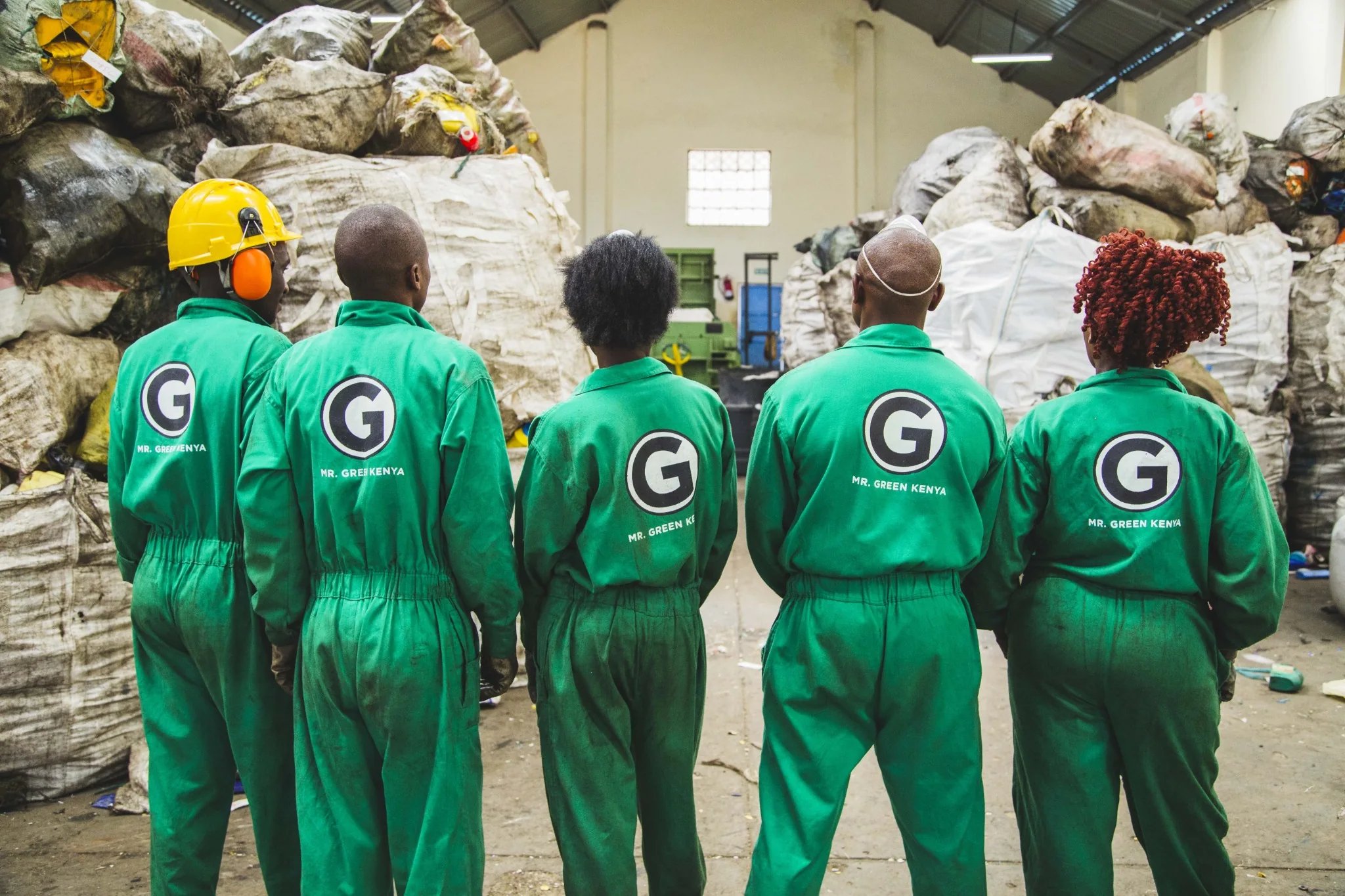
Mr. Green Africa, the first recycling company in Africa to obtain B Corporation certification, has built a network of 5,500 plastic collectors, created 150 direct jobs, and recycled 30,000 tons.
By processing locally collected waste into high-quality recycled materials, Mr. Green Africa provides manufacturers with a competitively priced domestic alternative to imported virgin plastic. This creates benefits on both sides: the company secures a reliable supply of raw materials while collectors gain more stable incomes. This win-win mechanism, which the minds behind Mr. Green Africa have now modeled in Kenya, can be replicated not only in countries of the Global South, but worldwide.
MGA'S INNOVATION: THE DIGITAL RECYCLING SYSTEM
The key lies in putting technology at the service of people without losing sight of economic profitability. Mr. Green Africa’s digital solution uses a platform to track the flow of plastic waste throughout the entire value chain and create individual profiles for each collector.
Through a network of purchasing points in Nairobi, Mr. Green Africa can acquire recyclable plastic from collectors at a fixed price higher than the market rate. This guarantees a stable and predictable income for the collectors, which in turn ensures a constant and reliable supply of raw materials for the company. In addition to a fair price, the company offers waste collectors training, healthcare, access to microloans, and protective clothing.
HOW IT WORKS
The heart of the platform Odoo, open-source software implemented to unify and automate the company's processes.
App for Collectors and App for Consumers: One of the platform’s crucial functions is integrating more than 7,000 informal waste collectors into the Mr. Green Africa’s value chain through accessible digital tools. A licensed mobile application supports this integration and operates under specific terms of use. The company has also developed a consumer app that enables home waste collection, a service that was especially useful during the COVID-19 pandemic.
Financial Innovation: In a recent pilot program, Mr. Green Africa implemented a savings and investment solution using stablecoins, operating through accessible channels such as WhatsApp and USSD. This initiative seeks to offer collectors a savings alternative in dollars that can protect them from inflation and climate-related disruptions without requiring a smartphone or traditional bank account.
PARTNERSHIPS, BLENDED FINANCE: THE KEY TO THE FUTURE
Mr. Green Africa believes that partnerships with mobile network operators could take its business "to the next level," allowing them to adopt more consumer-centric models. For example, the company is considering ways for consumers to exchange plastic—and even electronic waste—for points redeemable for goods such as phone credit or data packages. This could help foster larger-scale change in behavior.
Mr. Green Africa is financed through a combination of impact venture capital, debt, and strategic partnerships with multinational corporations and funds focused on the circular economy. The company does not disclose the exact total amount of its budget or revenue.
FUNDING & INVESTMENT ROUNDS
- Series A (2019): Co-led by DOB Equity and the Global Innovation Fund in partnership with Unilever, providing an initial equity and debt package of $1 million, with GIF subsequently committing up to $2.5 million in total.
- Bridge Loan (2020): Mr. Green Africa received $350,000 from the Open Road Alliance to help maintain stability for informal waste collectors during a critical period.
- Series B (2021–2022): The round formally closed in early 2022 and was led by Dow Venture Capital.
- Pre-Series C (2025): The Global Innovation Fund provided further follow-on funding to help the company increase its recycling capacity fivefold.
KEY PRIVATE & IMPACT INVESTORS
- Dow (The Dow Chemical Company): Lead investor in the Series B round through its venture capital division, focused on recycling and co-developing flexible packaging.
- Global Innovation Fund (GIF): An innovation fund that has committed $2.5 million in accumulated capital.
- DOB Equity: An impact investor backed by a Dutch family, focused on East Africa.
- Minderoo Foundation: A foundation Australian company focused on eliminating plastic waste.
- AlphaMundi Group (AMG): Swiss impact investment manager operating in emerging markets.
- The BESTSELLER Foundation: Philanthropic investor focused on the circular economy.
- Water Unite Impact: Investment vehicle associated with Wellers Impact.
- Unilever: Key strategic and commercial partner in supply chain and sustainability.